
EUCOPE Resources / Press Releases - November 17, 2025
EUCOPE and Copenhagen Economics Publish New Report on the impact of EU Legislations on Life Sciences Competitiveness
Press Release
Brussels, 17 November 2025
Today, the European Confederation of Pharmaceutical Entrepreneurs (EUCOPE) published a new report titled Competitiveness of the EU Life Sciences Sector – Analysis of the impact of current and future EU legislations on the competitiveness of the EU life sciences sector, developed in collaboration with Copenhagen Economics.
The report examines how ten key EU legislations — including the General Pharmaceutical Legislation (GPL), Clinical Trials Regulation (CTR), EU Health Technology Assessment (HTA) Regulation, Medical Device Regulation (MDR), and the forthcoming Biotech Act — are shaping the competitiveness of the EU’s life sciences industry. It provides an in-depth analysis of how these frameworks affect innovation capacity, compliance costs, international competitiveness, and market access.
Against the backdrop of the European Commission’s Competitiveness Compass and growing concerns about the EU’s declining share of global pharmaceutical innovation, the study finds that the EU still has significant work to do to fulfil its ambition of becoming a leader in life sciences.
“The findings confirm what our members experience on the ground: while the EU is taking important steps to improve its regulatory landscape, the cumulative effect of fragmented and complex legislation risks eroding the EU’s attractiveness for life sciences innovation,” said Alexander Natz, Secretary General of EUCOPE. “To close the competitiveness gap with other regions, policymakers must focus on predictable incentives, simplified procedures, and a coherent framework that supports innovation and investment in the EU.”
Key Findings from the Report
- Innovation capacity remains constrained
Despite the intention of new legislations such as the GPL, HTA, and CTR to streamline procedures and incentivise R&D, their implementation risks consolidating national differences rather than eliminating them. Weakened incentive frameworks, particularly the reduction of baseline regulatory data protection, may deter long-term investments in research and development. - Compliance costs are increasing
Across the studied legislations, companies — especially small and mid-sized enterprises — face mounting administrative and reporting obligations. Even harmonisation-focused laws, such as the CTR and HTA Regulation, have yet to deliver tangible simplification due to overlapping EU and national requirements. - The EU risks widening its competitiveness gap
Compared to global peers, the EU regulatory environment remains slower and less predictable. Stricter rules under the MDR/IVDR and GMO frameworks, coupled with fragmented implementation of new legislations, make the EU a less attractive location for clinical trials and product launches. - Market access delays persist
The study finds that nearly half of innovative medicines were unavailable to EU patients in 2024, with average waiting times for orphan drugs exceeding 570 days. Without addressing disparities in access and reimbursement processes across Member States, the EU risks undermining incentives for innovation and patient access to cutting-edge therapies.
A Call for Coherent Reform
The report underscores the need for holistic and coordinated policymaking to strengthen the EU’s innovation ecosystem. The forthcoming Biotech Act and the European Health Data Space hold promise to reinforce R&D capacity — but only if implemented ambitiously and consistently across Member States.
“The ongoing t EU mandate presents a crucial opportunity to realign European pharmaceutical and health policy with its competitiveness goals,” added Dr Natz. “By reducing fragmentation, ensuring regulatory predictability, and aligning incentives with innovation risk, the EU can restore confidence among investors and innovators.”
Download the full report here.
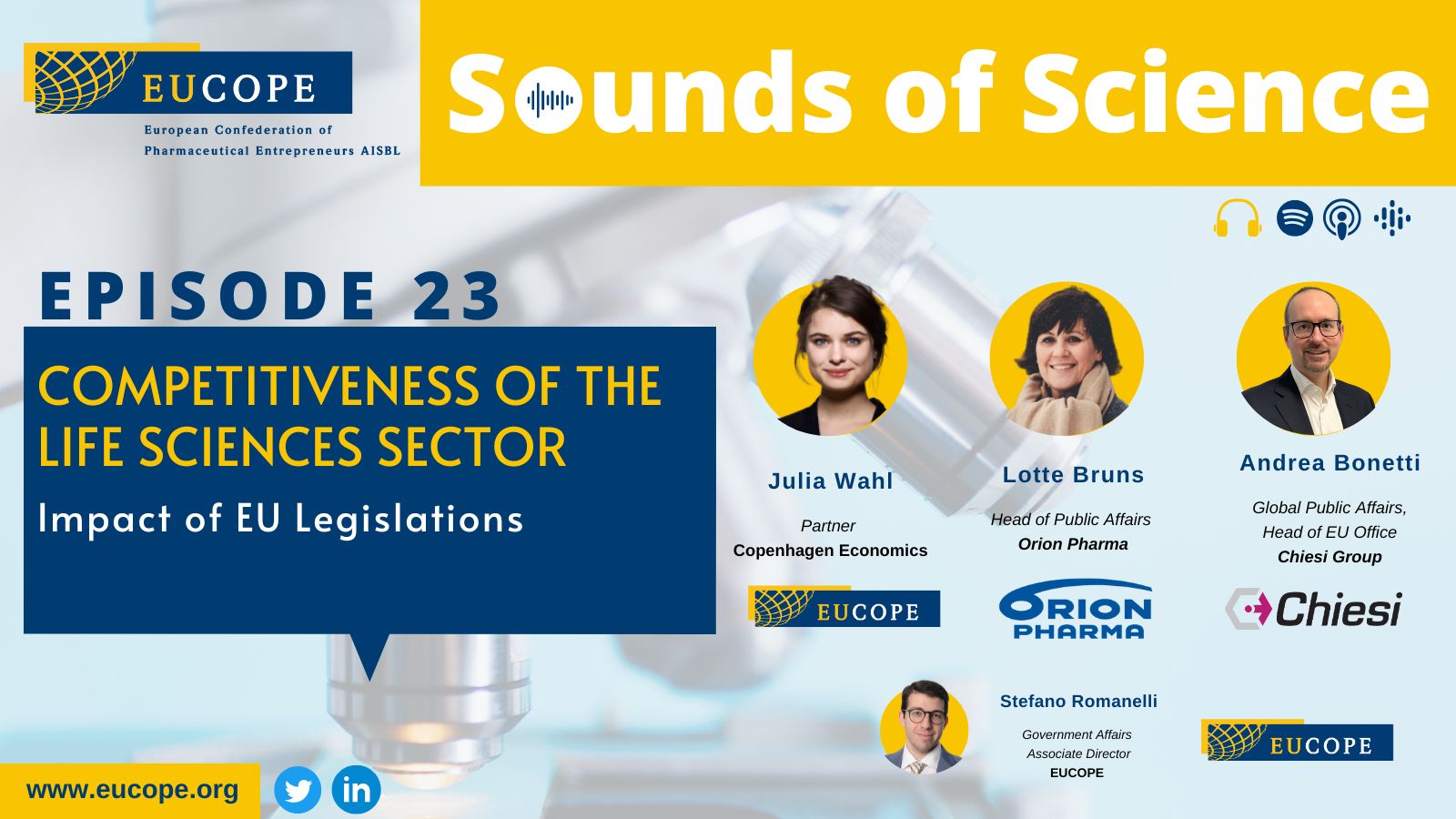
Listen to the accompanying EUCOPE Sounds of Science podcast episode here.